


Climate safe garden design to shelter your home
Prepared by Adam Grubb, Very Edible Gardens
As our city boundaries expand and density increases, the urban heat island effect warms Melbourne ever more. And due to greenhouse emissions, Victoria’s climate is growing hotter, drier and more extreme. But there are ways we can moderate temperatures in our garden and houses – both keeping them cooler in summer, and warmer in winter – using some judicious garden planning.
How plants can moderate temperatures
There are three main ways plants can moderate temperature:
- Shade. This is the most obvious one. It’s always cooler under the canopy of a tree.
- Evapotranspiration. Plants draw water from the ground and release it from their pores (stomata), which helps keep them and the surrounding air cool.
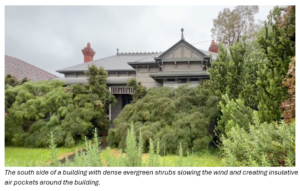
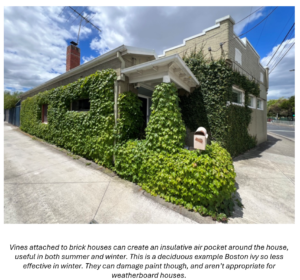
- Slowing the air. When they are nearby buildings plants can create an insulative layer. Plants a little further away can also be used as windbreaks.
But plants in the wrong spot might shade your house in winter, or make wind conditions worse. So, you want to choose the right plants, and place them well so we can create lovely local ‘micro-climates’ year-round.
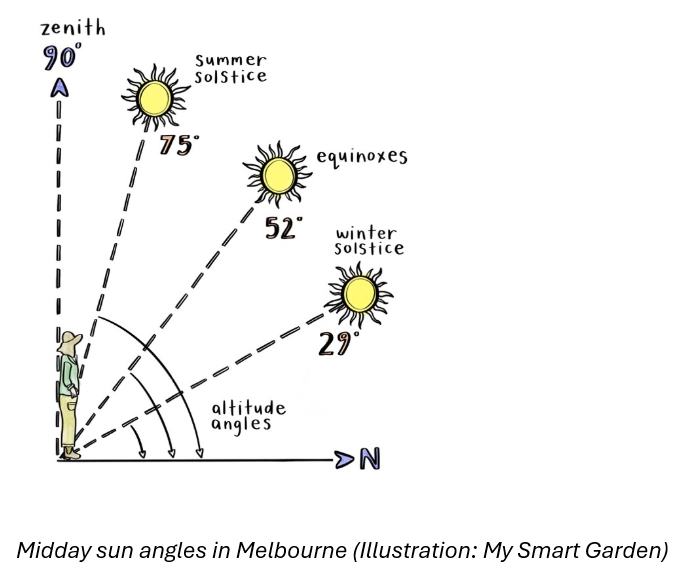
To get the sun and shade issues right, it’s useful to consider the sun angles throughout the year.
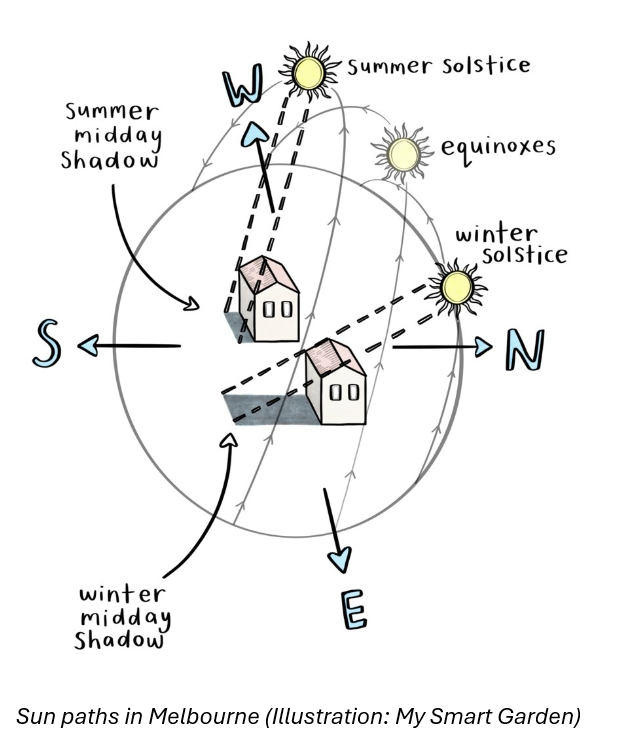
Summer sun gets quite high in the sky, whereas the winter sun is quite low, even at midday. We can use this fact to get sun into our houses in winter, and keep it out in summer.
That’s the midday sun, but equally important is where the sun is in summer in the morning and afternoon.
In summer, the sun spends a lot of time in low in the east in the morning, and low in the west in the afternoon. More heat tends to enter our houses in summer from the east and west than from the north.
If you want to see where the sun is throughout the year at your place, you can get a pretty good idea just considering this chart, but there are phone apps (with names like Sun Surveyer, Sun Seeker) that can also help.
Ok, well what to do?
Using trees and vines to moderate the sun
Evergreen vs deciduous plants
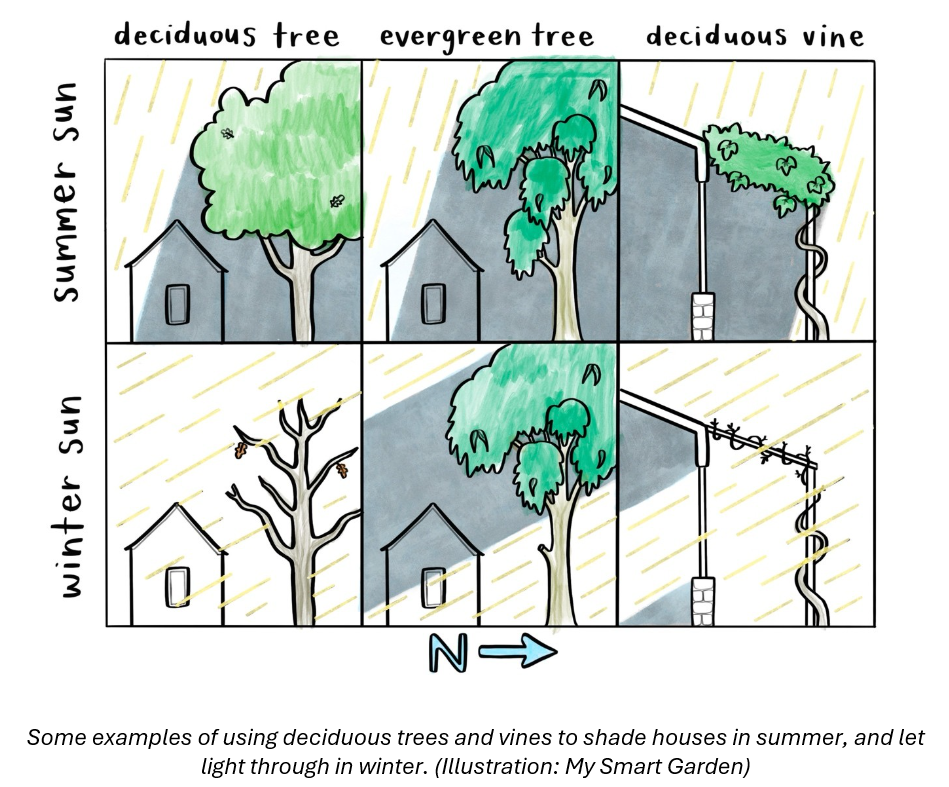
Evergreen plants keep their leaves year-round, whereas deciduous plants drop their leaves in winter. Employing deciduous plants in certain locations, can give us the advantage of letting light through when we want it most, but blocking it when we value shade.
Where to put plants to moderate the sun
On the north of your building
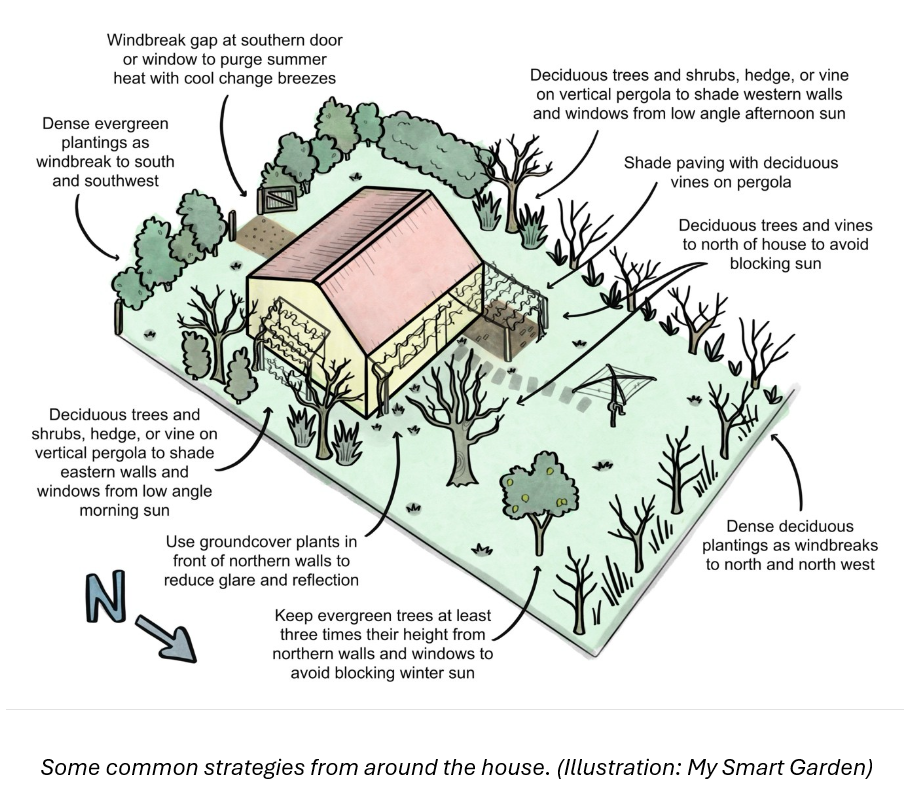
On the north side of our buildings, deciduous trees and vines can block the sun in summer and let light through in winter.
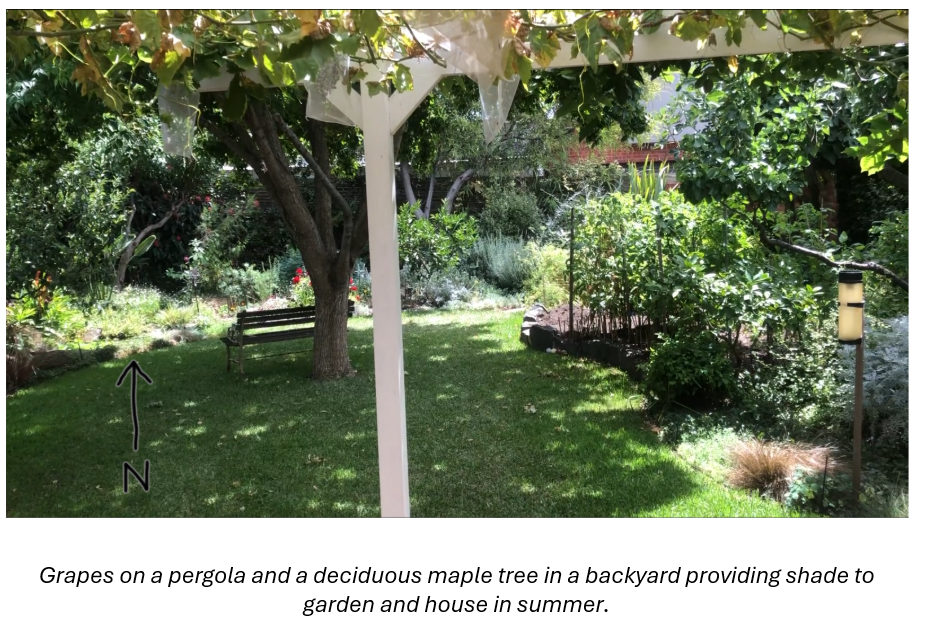
A deciduous vine on a pergola on the north side of your house is a great way to create summer shade and let in winter light. Trees can perform the same function but can block views, and take longer to grow.
Note that in the example to the right, a very large evergreen tree is letting light through to the house in winter. High pruned large trees can work in some instances – once they’ve reached a certain height — but in general you don’t want to plant evergreens too close to your north or they will create winter shade.
On the east and west of your house
On the east and west of your house lots of summer heat can enter. If your house is exposed to the morning or afternoon sun, consider using fast growing plantings including perhaps vines on a vertical trellis, on the east and west sides of your house.
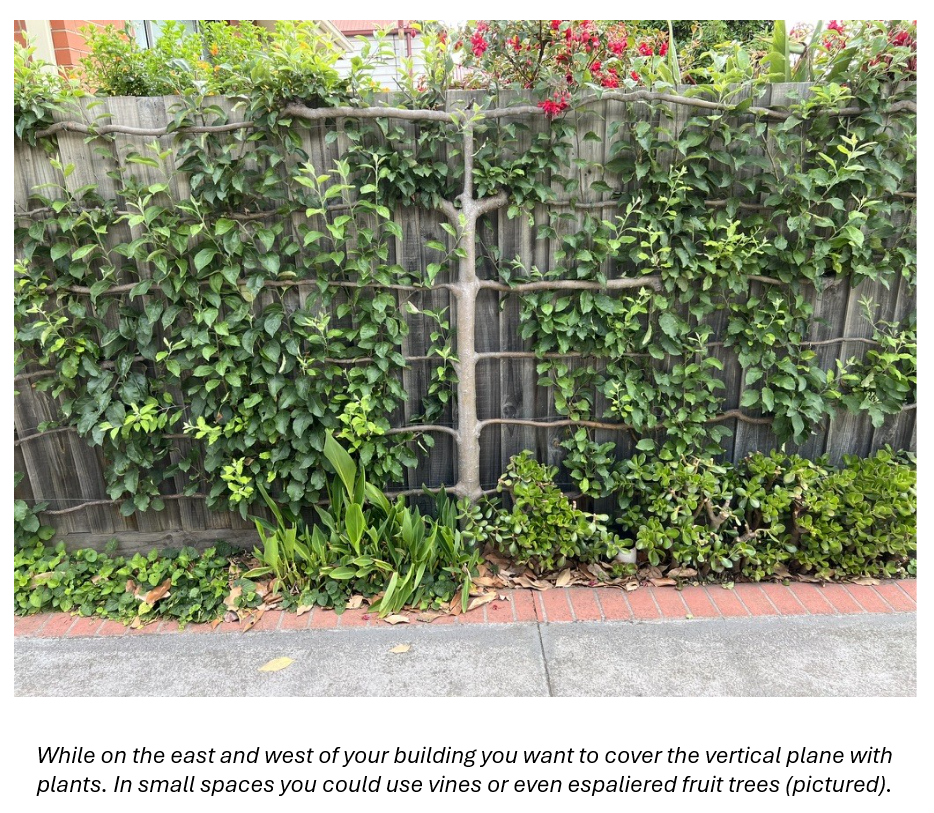
Some examples of deciduous vines
Edible
- Grapes, kiwifruit, kiwiberry, hops, choko (the latter two regrowing from tubers each year)
Non-edible
- Virginia creeper, Boston ivy, ornamental grapes, wisteria
Some examples of deciduous trees
Edible
- Most pome fruits: apple, pear, quince
- Stone fruits: peach, nectarine, apricot, plum, cherry & almonds
- Others: mulberries, figs, persimmons, pomegranates, walnuts
Non-edible
- Ash, maple, elm, honey locust, black locust, most oaks, white cedar & many many more
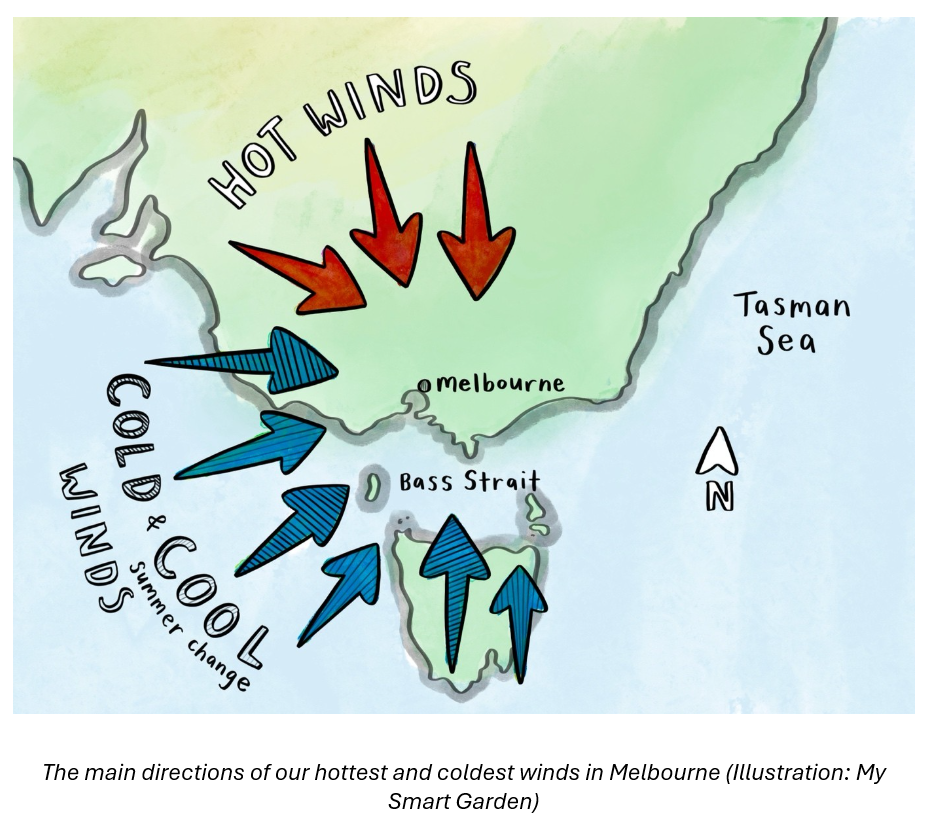
Moderating winds
In Melbourne we tend to get the hottest winds from the north and northwest, and the coldest winds from the south and southwest.
That said, structures around your building, proximity to the ocean, where you are in a hilly landscape etc., can all effect the wind speeds and directions at your home.
Slowing the speed of wind can make your experience in the garden so much more pleasant, and your sensitive plants will appreciate it too. Reducing wind hitting your house can help with your heating bills in winter really significantly – up to 40% in a North Dakota study, although perhaps a little less in Melbourne’s milder climate.
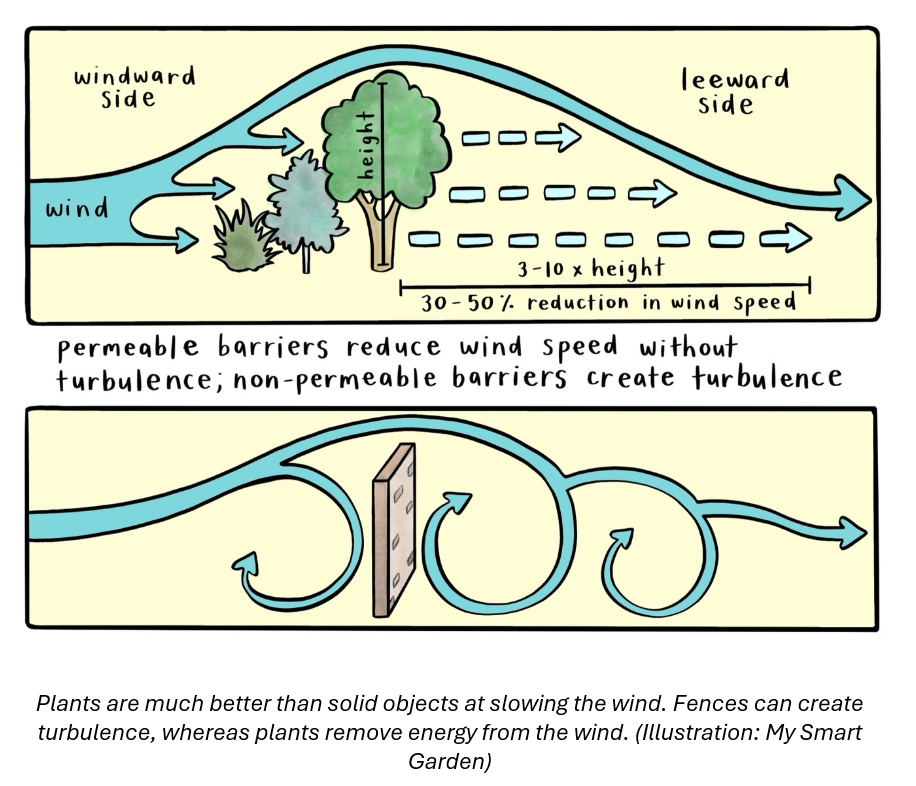
So, we especially want to stop the cold winds coming from the south and south west in winter, and for this we need to employ evergreen plants.
The plants might be along the fenceline of your property and act as a windbreak for the garden too. Or be close to a building to provide insulative properties too.
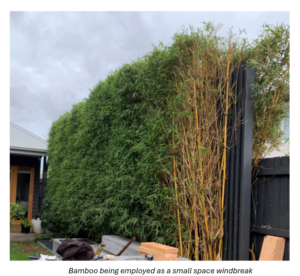
Are plants always the answer?
Sometimes external blinds are the only options for shading windows when there’s no opportunity for planting plants. And external blinds can provide immediate relief with no waiting for a plant to grow. If the north side of your house’s roofline is without eaves (lack of eaves allows summer sun to enter north facing windows), sometimes there are opportunities to add awnings above the windows which serve the same purpose. For windows above ground level this might be the only option.
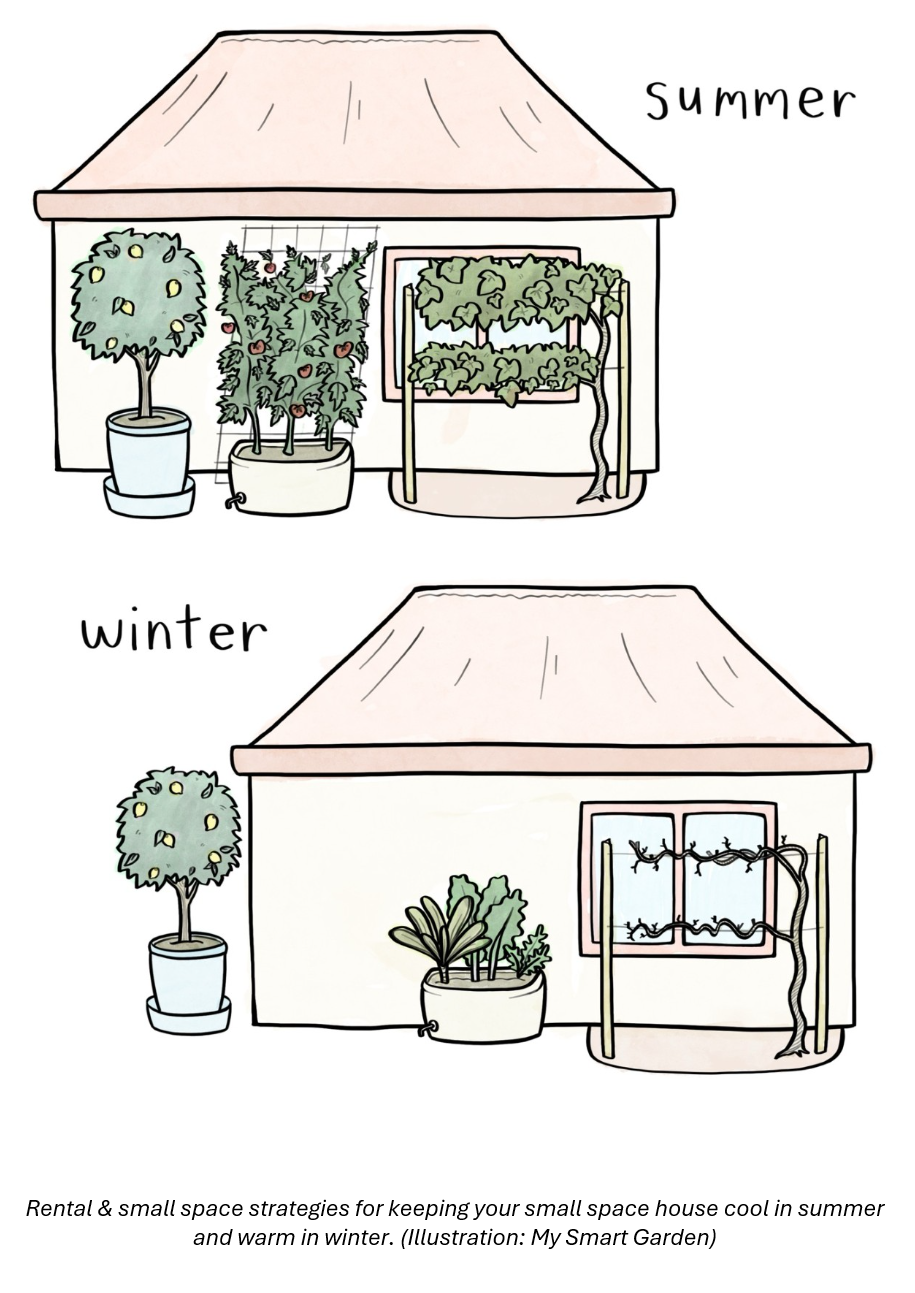
Of course, not all will apply to your situation but even in small spaces and rental situations you can usually do something, like in the example to the right.