



Growing a Pollinator Garden for Habitat
Written by Karen Sutherland, 2025
Why Pollinator Plants Matter
Pollinator gardens provide essential food and shelter for insects such as bees, butterflies and moths and other beneficial insects, birds, lizards and small mammals such as microbats and possums. Many creatures rely on specific plants, and urban development increases the importance of planting local native species, as plants are cleared for housing. A healthy habitat includes all levels of the ecosystem—from insects to apex predators. Pollinator gardens for habitat support healthy ecosystems and productive food gardens.
Plant for diversity & year-round flowers
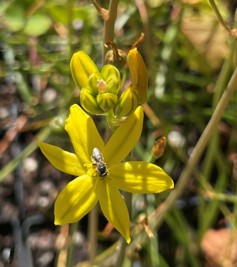
Growing a wide range of native and exotic flowering plants will support different insects and in turn other wildlife up the food chain. Aim for a diversity of blooms across all seasons. Useful native plant types include native daisies, banksia, tea trees and grevilleas. Exotic pollinator favourites include marigold, agastache, fennel and pineapple sage. Native groundcovers and small plants such as running postman, native violet, bulbine lily and tussock grasses also provide habitat for small lizards and insects.
Provide safe water sources
Use shallow dishes with floating sticks for insects and ensure birdbaths are placed safely away from cats. Refresh water at least weekly to avoid mosquitoes breeding and possibly transmitting the dangerous Buruli ulcer.
Avoid chemicals entirely, if possible
Avoid pesticides, herbicides and even organic sprays if you can, as they harm beneficial insects, birds, lizards, frogs, and soil organisms.
Offer shelter & nesting sites
Insects need a range of flowers, can make their homes in insect hotels and some such as earth-dwelling bees need bare ground to lay their eggs into. Birds of different types need prickly shrubs, tall trees and perching branches. Lizards need rocks, logs and leaf litter. Possums like hedges of bottlebrush, grevillea and lilly pilly. Microbats can be encouraged by bat boxes – see links at end of article.
Wildlife protection
Netting Safety
- In Victoria, netting must be ≤ 5mm x 5mm mesh to prevent wildlife injury. You can lift sides at times during the day to allow bees to access flowers. Even in states where this is not required by law, it is always best to use wildlife friendly netting.
Rat Management (Bird-safe)
- Use first-generation rodenticides (Warfarin, Coumatetralyl) to avoid secondary poisoning of owls and other predators.
Sticky Trap Laws in Victoria
- Sticky traps must be enclosed in wire mesh to prevent birds and lizards from being caught. Even in states where this is not required by law, these traps should always be enclosed in wire.
Cats & Wildlife
- Keep cats indoors at night, desexed, registered, with bells on collars.
Beneficial insects & native pollinators
Bees
- European honeybee populations are declining worldwide due to Varroa mite and Colony Collapse Disorder, as well as the widespread use of chemicals in agriculture and gardening. IN Australia we are lucky that our local native flora supports not only honeybees but a range of other pollinating insects and wildlife.
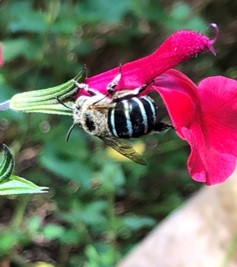
- Blue-banded bees are excellent buzz pollinators for tomatoes. These nest in soft mortar and crumbling bricks and only travel 50 m from their solitary nest.
- Hoverflies can pollinate in colder weather and shade than European honeybees and are a very useful replacement for wild honeybee populations affected by Varroa mite.
Butterflies & Moths
- Both butterflies and moths require nectar plants as adults and specific host plants for their caterpillar stage to feed on. In your garden if you can provide tall grasses and diverse flowering plants it is a good start, but if you want to encourage specific butterflies or moths you will need to look up which plants they need. There is a link in the end references.
Helpful predatory insects
Ladybirds at their nymph stage, when they look like a cross between a ladybird and a mermaid, can easily be mistaken for a pest! Ladybird nymphs eat aphids, mites, mealybugs, and scale insects. Adult ladybirds love parsley pollen!
Green lacewing larvae prey on mites, small caterpillars, scale, immature whiteflies and aphids.
Praying mantises predate aphids, caterpillars, small beetles amongst other pests. Praying mantis woody-looking egg cases appear in gardens in autumn and should not be removed, to protect next year’s praying mantis, so learn to recognise them! The egg cases can be seen on paling fences, windowsills, branches of trees and shrubs and other places.
Permaculture & habitat
Permaculture naturally integrates habitat principles, supporting predators, pollinators, and soil health, creating resilient ecosystems that naturally reduce pest issues.
Local resources & further learning
- Melton Botanic Gardens Plant Explorer: https://melton.gardenexplorer.org/
- iNaturalist App A Community for Naturalists · iNaturalist
- CSIRO Insect ID: https://www.csiro.au/en/research/animals/insects/id-resources
- Australian Bugs database: https://australianbugs.com/
- Museum Victoria ID help: https://museumsvictoria.com.au/ask-us/identify-an-animal-or-object/
- Australian Museum insect ID: https://australian.museum/learn/species-identification/ask-an-expert/identifications-insects/
- Wheen Bee Foundation (look for your region in Melbourne): https://www.wheenbeefoundation.org.au/our-work/projects/powerful-pollinators/
- Bat Boxes: https://www.abc.net.au/gardening/factsheets/building-a-bat-box/9432924
- Blue banded bee head-banging pollination: https://www.abc.net.au/news/science/2015-12-15/australian-blue-banded-bee-is-a-head-banger/7019074
- Hoverfly pollination: https://www.abc.net.au/news/2023-09-22/hover-flies-step-up-as-pollinator-as-varroa-mite-hits-bees/102880708
- Butterfly garden guide: https://www.edendale.vic.gov.au/Nursery/Planting-tips/Planting-a-Butterfly-Garden