



Maximizing Growing Space
Presented by Kat Lavers
Food gardeners living in an apartment with a balcony, or a unit with a small courtyard, need to design carefully to make the most of the growing space. But with a few tips and tricks it is possible to produce a useful harvest even in small spaces.
Find a space
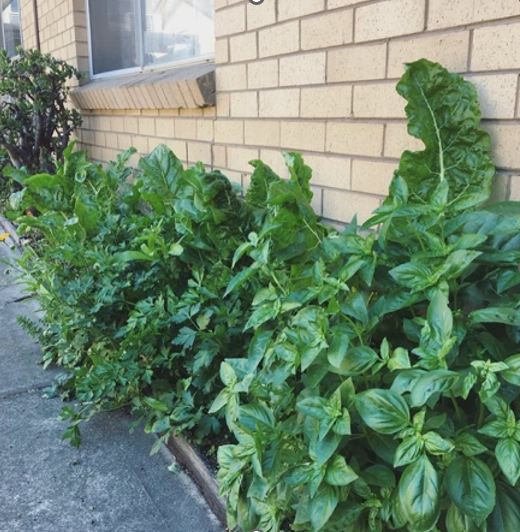
Look for spaces that receive at least part sun all year round. If your sun is limited, use light-coloured walls or painted panels or mirrors to bounce more light into the area. Few plants can tolerate full shade conditions and growth will be weaker and slow, but if you are stuck with a shaded spot then mint, parsley and silverbeet are your best bet.
If you don’t have a suitable balcony, courtyard or other garden space of your own, many councils allow residents to garden on nature strips provided some guidelines are followed for safety and access. Perhaps your local area has a community garden that you could join? Or if not you could even start one!
Growing in pots
While growing plants in the ground is preferable to reduce maintenance, if it’s not possible to grow in the ground then pots are a great alternative. Choose a size that you will be able to move (if needed), but with a depth of at least 30 cm so it does not heat up or dry out too quickly and there are enough nutrients to sustain a healthy plant.
Self-watering or wicking pots are very useful for maintaining soil moisture during hot weather. You can create your own from a 10 or 20 L food grade plastic bucket which
are often available at no charge from cafes and restaurants. Simply drill a 1 cm hole about 7 cm up from the bottom on the side of the bucket. Fill your pot with sandy soil or potting mix, and add some compost. Water until it starts to overflow from the hole. The base is now saturated and this water can be used by the plant as needed. Protect the plastic from sunlight to extend the life of the pot. If you already have a pot with a hole in the base, you can put a plastic saucer that is 5 cm deep underneath it during hot weather for a similar effect. Water the plant and fill up the saucer before a hot day.
Decide what to grow
To decide what to grow in our limited space, we can ask questions like:
What is most productive? What is most expensive? What do I use most often?
What is most nutritious? What tolerates part shade? What is most versatile in cooking?
What has the highest environmental footprint when grown commercially?
In often makes most sense to start with herbs and leafy greens. These are highly productive, relatively expensive to buy and often grow well in small spaces with limited sun. They also take a lot of energy to package, refrigerate and transport commercially, so growing your own at home is much more sustainable.
Also look for crops that yield well in a small space, crop for most of the year and where you can eat most of the plant.
Recommended crops for beginners growing in small spaces are:
Silverbeet Spring onion Sorrel Parsley Mizuna (salad green)
Thyme Rosemary Oregano Garlic chives Rocket and wild rocket
Lebanese land cress (salad green)
Maximise your yield
To make the most of a small space, you can:
- Trial multiple varieties of the same vegetable (i.e. grow different types of green bean) and see which ones are most suited to your conditions
- Space your plants according to packet or label instructions to make sure they have enough room to grow without wasting space
- Use vertical space by growing up stakes and trellises. Some possible crops to grow vertically are climbing beans and peas, ‘indeterminate’ tomatoes, chokos, tromboncino (a pumpkin that can be used like a zucchini when small) and Malabar climbing spinach.
- Save and grow your own seeds to make sure you have the strongest plants possible
- Grow sprouts in your kitchen! Dry lentils from an organic bulk foods store are a cheap option. Simply soak overnight in water, then rinse twice daily, draining well. I reuse a plastic mesh bag over the top of a glass jar, and set this to drain in the dish rack.
Harvest tips and tricks
- Rather than cutting the whole plant, many leafy greens can be harvested for weeks or months by taking the oldest leaves (on the outside) first, allowing the youngest leaves in the centre to continue growing.
- Don’t harvest too much or too quickly! Ensure your plants reach their full height before picking, and at least six full size leaves should remain to continue healthy growth.
- Research whether any other parts of the plant are edible. Increase your harvest by eating ‘vegetable offal’ like beetroot greens, broccoli and cabbage leaves and stems, leek greens, young carrot tops, silverbeet stems and young zucchini, pumpkin and choko leaves.
- If you aren’t able to grow a large variety of produce, take what you have to a local ‘crop swap’ and exchange it for someone else’s surplus.
www.katlavers.com.au Instagram: @kat.lavers
Garden design, permaculture education and facilitation
for fair, healthy and abundant food systems