




Growing Berries
Presented by Scott Hitchins
An important part of the home-grown fruit-garden that many people forget are the ‘In-betweeners’: Those little fruiting plants that fit in between our larger fruit trees and garden beds, in pots and hanging here, there and everywhere. In this workshop, you’ll learn the tips and tricks to growing such luscious berries as strawberries, blueberries, cherry and pineapple guavas, goji berries, raspberries, currants, gooseberries, cape gooseberries and more. As our presenter brambles on, you’re bound to have a berry good time!
What is a berry? and what isn’t but still is?
We all know what we mean when we say “Berry” but in botanical terminology, a berry is a fleshy fruit without a stone produced from a single flower containing one ovary. Berries so defined include grapes, currants, and tomatoes, as well as cucumbers, eggplants (aubergines) and bananas, but exclude certain fruits commonly called berries, such as strawberries and raspberries. (Adapted from Wikipedia). Just to be clear, we are talking today about berries in the common usage of the term rather than in the strict botanical sense.
Forest Fruits in the Food Forest
An important factor to understand when deciding where and how to grow berries in your home garden, is that most of the berries we will discuss originated as understory plants in cold or cool-temperate forests. They mostly exist as small shrubs, scrambling plants, or ground covers and cope well with partial shade. This makes them an ideal plant for your Food Forest as they will fill many of the ecological niches in between your larger fruit trees and most types will be producing fruit by their first year, supplying you with luscious fruit years before your long-term fruit trees become productive. While often shade tolerant, most berries will fruit more heavily with full sun. However, being temperate forest dwellers, they can also be very susceptible to sunburn on blazing summer days. On hot days, either cover them with shadecloth (or even an old bed sheet) or plant them in pots which can be moved to shadier spots.
Raspberries Blackberries and other brambles and canes
Brambles are thorny scrambling plants that can grow canes several metres long. There are hundreds of different varieties, but they are all hybrids (crossbreeds) between raspberries and blackberries or secondary hybrids between resulting hybrids. Some common examples are Loganberry, Dewberry, Tayberry, Marionberry, Boysenberry and Youngberry but there are many more.
Brambles are generally bought as single canes in late winter or early spring. They can be purchased in pots but are usually cheaper to buy as dormant bare rooted specimens in winter. Buying them inline from reputable suppliers will give you access to more varieties and often at a much lower price, even with postage included.
Plant your canes into mounds or raised rows in soil that has been improved with plenty of compost and aged manure. Recommendations vary but planting them at least one metre apart will make them easier to manage. Closer plantings can become confusing and tangled but can be used as a ‘Fedge’ (edible hedge). I find that the easiest way to manage a planting is to space two hefty stakes 1-2 m apart and run a couple of wires between them. As the first year’s growth comes up, keep them bundled together to the left. Shoots which come up after fruiting has finished and in the following spring, get bundled to the right. This continues alternating on a yearly basis. The reason for this alternation is that canes that have already fruited will not fruit again and will mostly die off, so they need to be pruned out. The left-right method makes it much easier to know which parts to remove.
Your plant will eventually produce an excess of suckers (new shoots) and some of these can head out on underground runners which can emerge a metre or more from the parent plant. These excess and runaway shoots can be dug up with some roots attached and used to expand your plantings or to give away to gardening friends. Note: This suckering habit means that you should be careful about planting along fence lines where shoots could take off on the neighbour’s side. As well as being bad for neighbourly relations, if the escapees are sprayed with poison, you could also lose your plants.
Pests: apart from birds, which you must net against. The commonest problem with brambles is fungal disease, which can be avoided by good airflow and removal of spent and crowded growth. If you get fungus, do some heavy pruning and then spray with a mixture of one part full-cream milk to nine parts water. If the problem persists, you may have to use a copper-based fungicide or re-plan elsewhere with fresh stock. The other common problem is Harlequin Beetles sucking the berries dry. These are controlled by diligent removal along with spaying with soapy water or white oil.
Strawberries are ground cover plants that can form a dense matt across an area that will choke out many weeds (couch & kikuyu still win). Again, a soil rich in organic matter and aged manures is preferable but as strawberries have very shallow roots, 8-10 centimetres of prepared soil depth is adequate. To obtain the mildly acidic soil which Strawberries prefer, add a scattering of iron sulphate (available as a mineral-based powder) and keep the plants well mulched with old pine needles. Keep moist but well drained.
Strawberries are propagated from runners: little plants sent out by the parent plant which can be pinned down to the soil to develop their own root system before being replanted elsewhere. Always take the first runners, cutting off and discarding runners off runners as these tend to be weaker and less productive. Some modern varieties only grow from seed and are best avoided if you want to propagate your own stock as the seed won’t some true to type. Every few years, your plants are likely to require complete replacement as they gradually become more disease prone and less productive due to virus accumulation. When this happens, start again in another spot.
Pests: By far the most common problem is birds and slugs & snails eating your prized fruit just before they are ripe. Net for birds, but slugs in particular are a problem. The best option is getting your strawberries off the ground in raised gutters, pipes or hanging baskets. If you find a fruit with a hole in it and a slater with a guilty expression on its face hiding inside, the slater is much more likely to have been caught at the scene of a crime committed by a slug (Storyline copyrighted by CSI My Garden)
Blueberries are shrubs which thrive in very acidic soil (pH around 4.5 to 5.5) and, for this reason, are not compatible with most other edible plants. The best option is to plant into large pots containing an acidic potting mix. These mixes are bought as Camellia & Azalea Potting Mix –try to find an organic blend as you will be eating these blue jewels. These potted plants can be placed along the sunny edge of your Food Forest or in amongst fruit tree varieties that are still young or which have an open canopy. Provide shade in very hot weather. Keep moist, even a bit damp. Mulch well with pine needles. Propagate from cuttings.
Modern varieties available will set fruit with minimum winter chilling and without a pollinator. However, you will get much more fruit if you obtain a few different varieties. As well as cross-pollinating, this will also allow you to determine which varieties best suit your garden.
Pests: Apart from birds, the only other common problem is scale: If you observe ants on your blueberry plant (or any other plant), check leaves and stems for the little shields adhered to the plant, sheltering a busily sucking scale insect. These can be white, yellow, black or brown. Hit ‘em with the old White Oil
White Oil: Combine 1 cup any vegetable oil with ~ 3Tablespoons of liquid soap. Store in a jar until needed. To use: Add about 2 Tablespoons of the mixture to a litre of water in a spray bottle. Shake well and spray on any bugs sucking the goodness out of your plants. Shake occasionally while using.
Currants, Gooseberries and Jostaberries are true part-shade lovers that are quite difficult to get to fruit in Melbourne unless you can find the right cool, semi-shady spot in your garden that gets a decent winter frost and can be kept moist. These plants can do well in Tassie or in cooler mountain area of Victoria.
Currants come in two main types; the Blackcurrants and the Red or White currants. I have had better luck with the Reds and whites which seem to set fruit at slightly higher temperatures, while the blackcurrants seem to be more temperamental. Blackcurrants are definitely at their best when cooked, pretty much always with added sugar. When raw, both the fruit and the bush are a bit stinky, likened by some to cat pee. Reds and whites (whites are just a variety of the reds that happen to have less natural colouring) can both be eaten fresh or made into jams, sauces, etc.
Reds/Whites are kept pruned to a single trunk, branching out into 8-10 main branches, with old wood replaced over several years. Fruit forms on both old spurs and new growth. Black currants sucker from the base, and these suckers are kept to a manageable number 0f 8-10 and pruned to be replaced by new suckers every three to four years.
Gooseberries are related to blackcurrants and require even cooler conditions to set fruit. They are trained as for blackcurrants, as are Jostaberries, which are a hybrid of gooseberries and black currants.
Elderberries: Elders form a large to very large shrub and cope with full sun to part shade. However, despite flowering well in full sun, they will set much more fruit in part shade. Very easily grown from cuttings and pruned every year or two by hacking off at about waist height. The berries are best eaten cooked as they are said to be mildly toxic. Cooked, they have a muscat-like flavour and combine well with apples in jams or desserts if you only have small quantities. Two main varieties are available: The European Elder, Sambucus nigra, and the North American Sambucus canadensis. I find that the North American variety sets fruit better in Melbourne’s climate. Very few pests apart from birds.
Mulberries can form very large trees and produce two large crops of fruit a year. While not true berries, they are so hardy, reliable and nearly bomb-proof, they are worth a try if your other berry efforts don’t do well enough to provide for your needs. They will grow well from Tassie to Queensland and should be kept heavily pruned so that they can be netted. No real pest problems apart from birds. Common varieties are the Black mulberry, White and King White (or Shatoot), the red mulberries (often sold in a weeping form) and the Hick’s Fancy; a black/red hybrid. Hicks is very vigorous, easy to grow from cuttings but produces a berry that is less sweet that the whites and less aromatic than the Blacks. Beware of purchasing some weeping varieties that are selected more for their tree shape than for the quality of their berries.
Guava Relatives
Ugni (Chilean guava), Cherry Guava, Feijoa:
These easy to grow berries can be an acquired taste for some, but excellent space savers which can be pruned as hedges or to fit in any shaped space. They are frost tolerant and cope well with semi shade or full sun and have few pests or diseases apart from birds
Cherry guava and feijoa can be difficult to grow from cuttings but grow readily from seed.
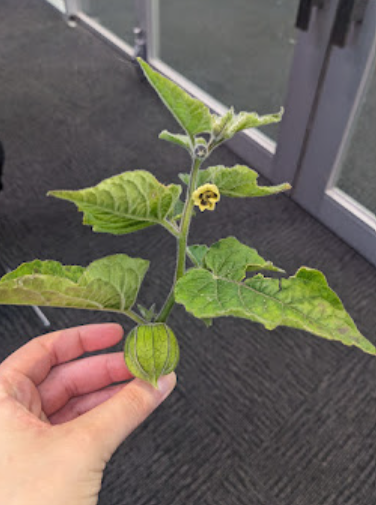
Cape gooseberries
Another tasty treat from the tomato family, they are not gooseberries and not from The Cape of Good Hope.
Physalis peruviana is sold under a few different names, such as ‘Inca Berry’ which, at least, correctly identifies them as being from South America, rather than South Africa
A short-lived perennial that suffers from frost damage but will usually spring back when the weather warms up.
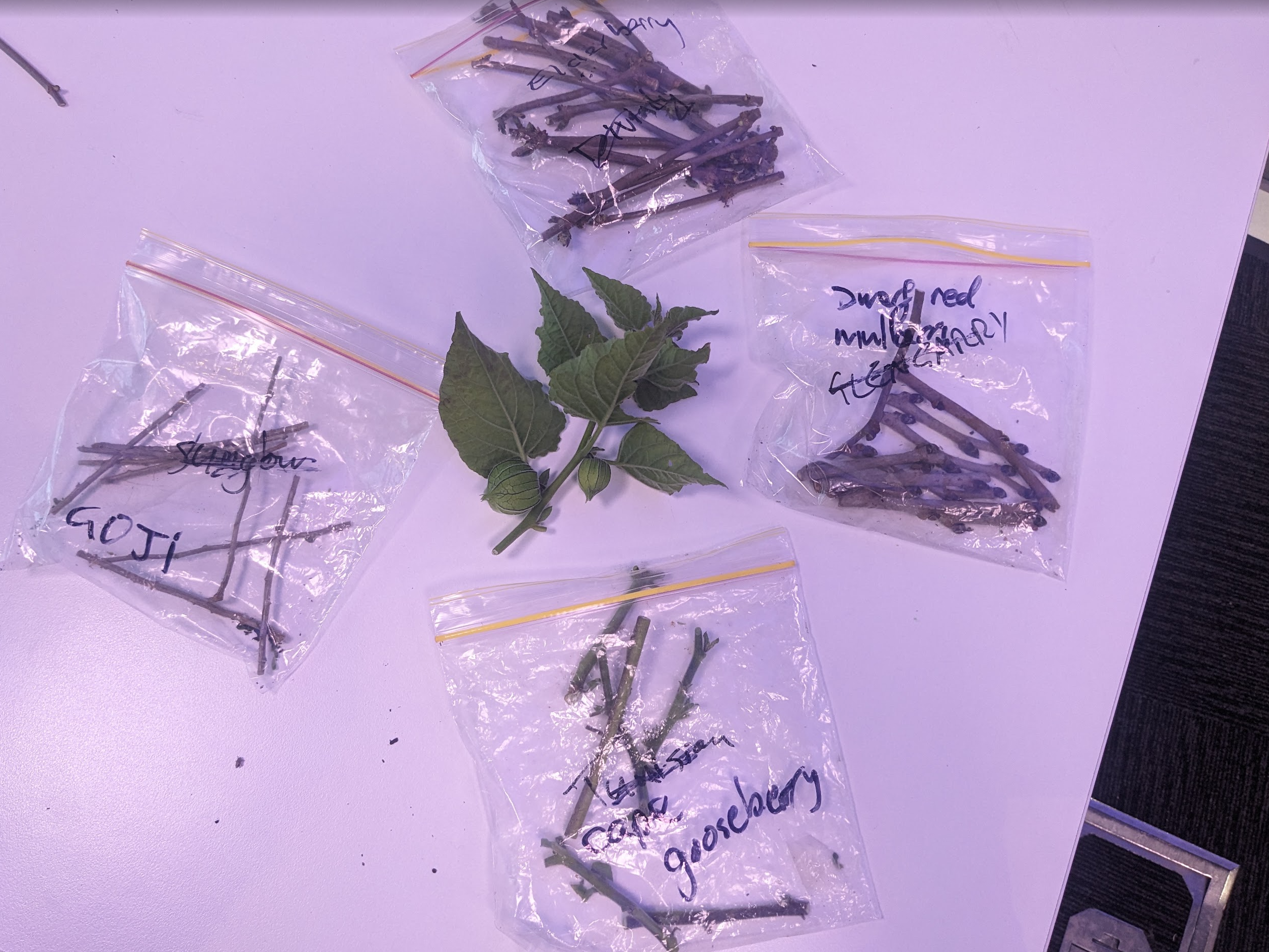
Prune after frost has passed to keep them compact, otherwise, grow as per tomatoes, and don’t forget to pot up the prunings for more plants. They grow easily from seed and even easier from cuttings.
The papery husk protects the fruit from most pests and you can pick fruit when the husk is dry and papery and the tangy fruit is a rich golden yellow; the fallen fruit is often the sweetest.
Goji berries
Originating from China and related to boxthorn, some specimens can be a bit thorny.
They are easily grown from cuttings but can also grow from seed. Cutting will usually start fruiting the following year.
They prefer full sun and deep pot or planted into ground
The shrubs tend to sprawl everywhere, so stake and prune to knee height every year or two in winter
Fresh gojis are much tastier than the stale dried ones sold as health food. Don’t pick them until they are fully ripe and red.
Eat them by the handful: Those non-gardeners inside don’t deserve them.
Indigenous berries
Midyim
Sweet and tangy with hints of apple, ginger, and spice, an evergreen shrub growing to about a metre. They prefer full sun to part shade
Prickly currant bush
A dense and prickly shrub with tiny orange/red fruit.
While tasty, harvesting is a lot of work with a small harvest. More of a novelty unless you are into bushtucker.
Native to southern Australia and Tasmania
Lillypilly/Riberry
An attractive shrub or tree, producing large amounts of pink, purple or white berries.
The fruit varies widely in quality, so it is best to obtain plants selected for their eating qualities rather than as ornamental specimens.