




Back
Top Tips for Happy and Safe Gardening with Children
Food
Notes prepared by Rebecca Marthick, 2025
Gardening with children is a great way to nurture curiosity, teach responsibility, connect with nature and build their understanding of where and how food grows. This article shares tips to garden safely and fun, hands-on activities that make gardening an enjoyable learning experience for all.
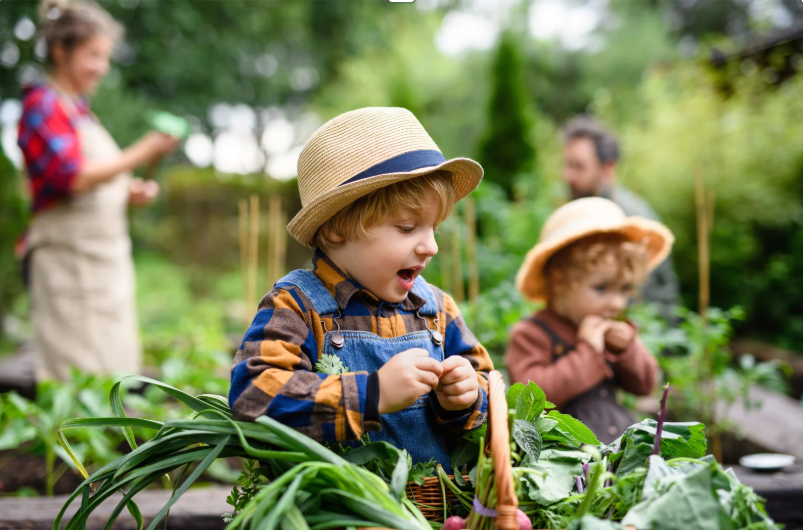
Top tips to garden safely with children
- Plan ahead – talk to your grandchildren about your garden project – what would they like to do with you?
- Organise your materials before you start. This will help build engagement with your child and hold their interest
- Use lightweight tools that are easy for both grandparents and young kids to lift and manoeuvre
- Use small-scale tools for very small children
- Opt for garden activities that are easily accessible (e.g. work at a bench or table) rather than having to kneel or bend down low in the garden
- Choose big seeds that are easy for everyone to handle
- Wear safety glasses and gardening gloves and help your child with sharp tools
- Modify garden tasks to make them safer and easier for everyone to manage
Growing together! Fun garden activities to share with children
- There are lots of gardening tasks that you can do together:
- rake leaves, turn compost, look for worms, sweep paths
- search for weeds
- pick flowers
- collect fallen bark or sticks to keep things tidy
- pick fruit, berries or vegetables
- water plants with a hose or watering can
- look for ants, insects and butterflies to see what they are doing
- plant some seeds to grow a flower, vegetable or herb
- make a salad garden in a container
- do an experiment to try growing a plant from another plant (strike a cutting)
These activities also teach children gross/fine motor skills, as well as balance, coordination, and a range of cognitive and social skills.
Some other ideas include:
- build on your shared garden experiences with garden-related art and craft projects
- read garden-related stories together
- go on an excursion to public gardens
- enjoy a visit to a local park
- use the produce grown in the garden, when cooking a meal together.
The key is to find activities that build connection and consider what is needed to make the activity easy and enjoyable for everyone.