




Chris and the Caulfield South Community House Garden
About this case study
We visited the Caulfield South Community Garden to meet Chris, a My Smart Garden regular, and find out more about how the garden works to support Chris and other locals. We spoke with Chris, John and Fika who are all volunteer gardeners there, and with Chrystal who is the Garden Program manager.
You don’t know who you’re going to touch, and you just have to be here. You’ve got to have open gates and open hearts.
Chris’ involvement with the My Smart Garden program
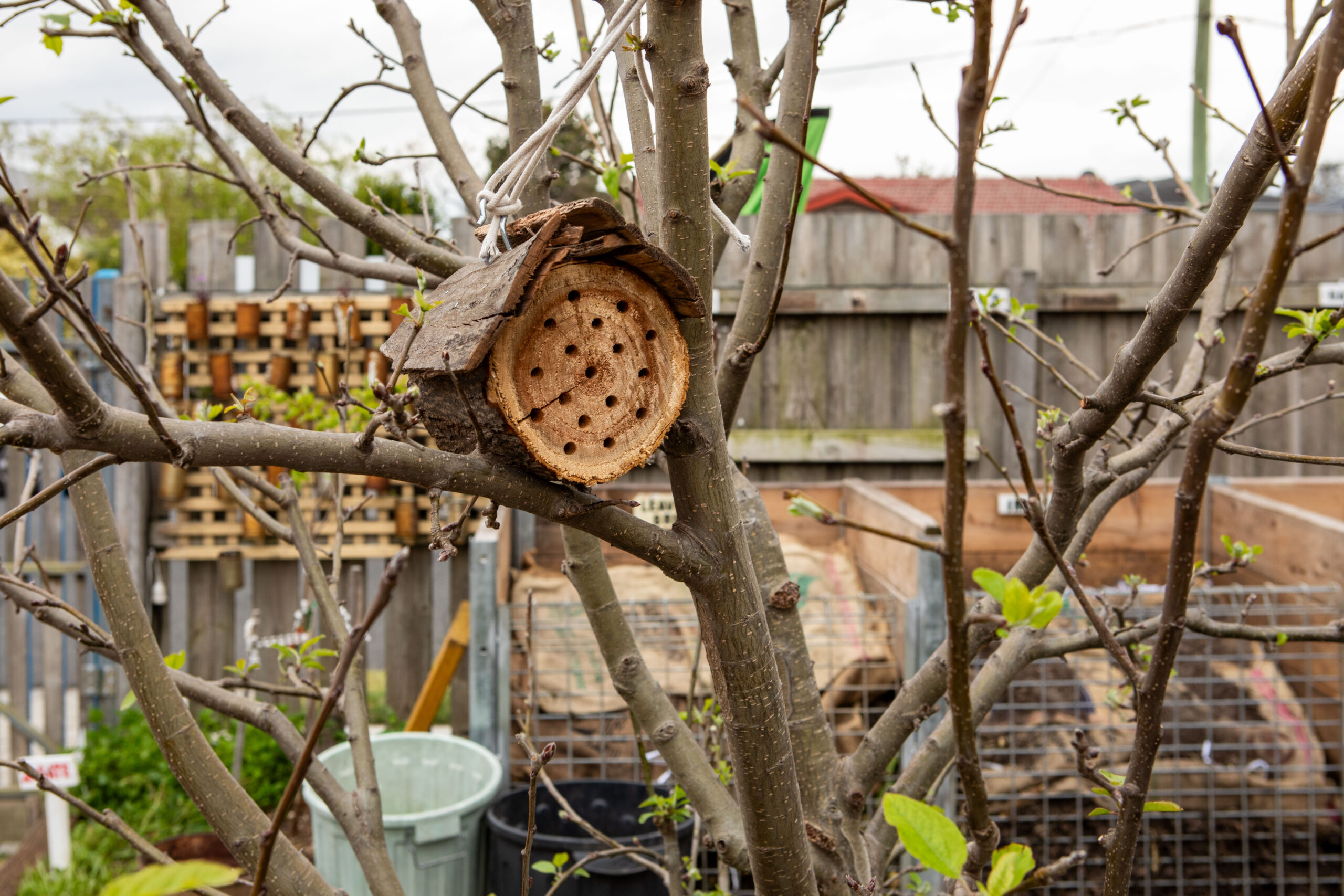
Chris: Everything I’ve learnt through My Smart Garden I’ve brought back to here to the garden. We had a new wicking bed built here so I went on to the My Smart Garden website to find out more. I’ve been to the talks on natural pests, and to one with an entomologist who talked about native grasses. We did the pollinator count, so now I look out for pollinators and native bees here in the garden. We had Clancy come and teach a workshop on building habitat for native bees here, so they’re now part of the habitat section where we already had some logs for reptiles.
When I learn with My Smart Garden and then bring it back here to the community garden, it consolidates my knowledge. Then I can ask other expert gardeners here to confirm what I think I know, or to teach me even further. There’s Chrystal and John, and Marjorie – she’s a wealth of knowledge. I text her when I’ve taken a photo of something, and she’ll go “Oh it’s this, this and this” and she is really good. So I’ve learnt a lot.
Chris’ involvement with the community garden
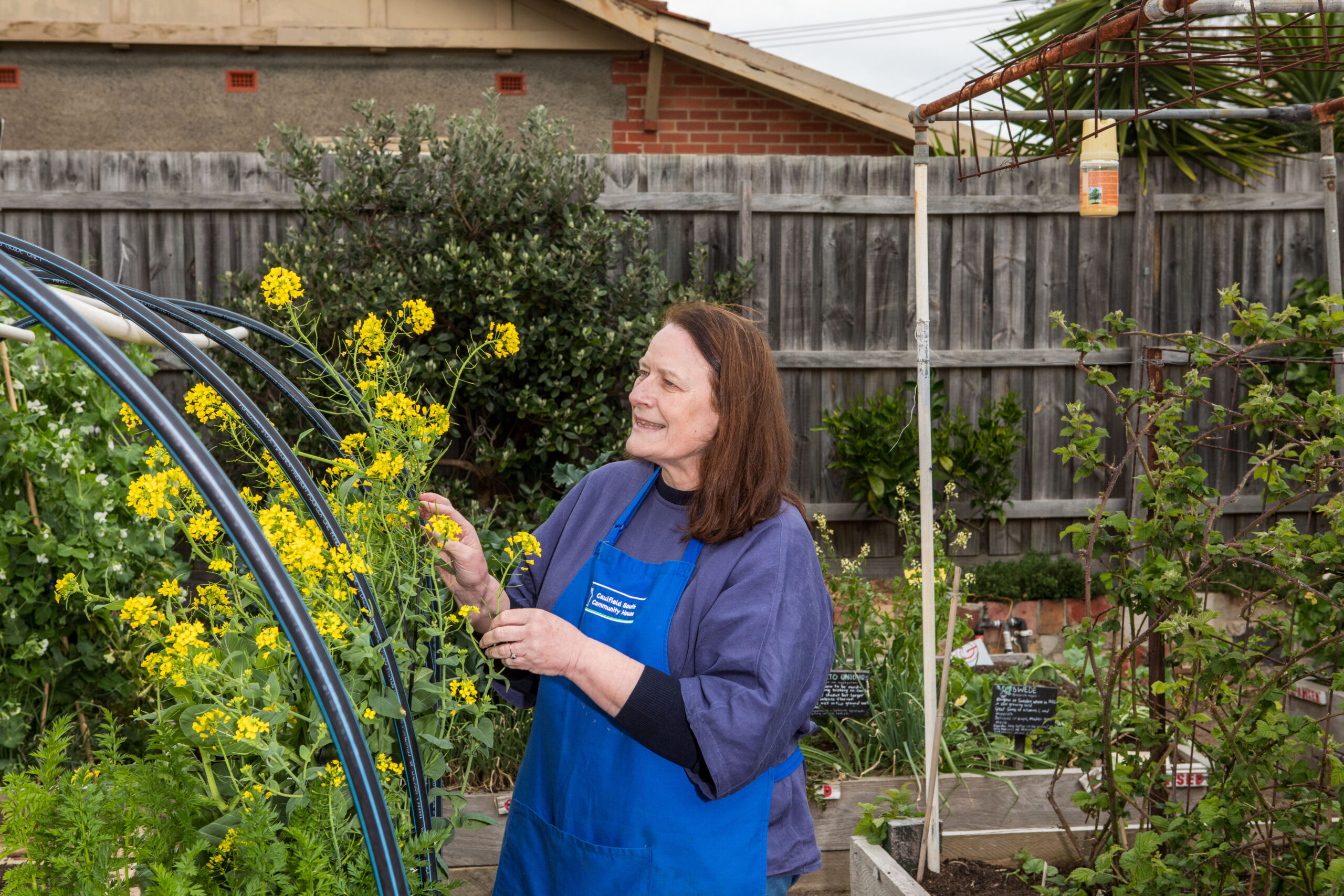
Chris: I’m part of the watering team here. I was working three jobs, so I just didn’t have the time to maintain a garden at home but by doing it here, I felt like I could learn about gardening. Sunday’s the only day I have off, so I come here, I water for 3 hours, and then I sit here and I play with the chooks, take some vegetables home.
I come during the week, sometimes I come just at night. I’ll just sit, meet my friends and have a coffee. And I’ve learned so much because I come on the open days and the working bee days and there’s so many people with knowledge that I’ve learned so much about gardening, so I’d like to eventually do my own garden once I’ve got some time.
For me, it really is a sanctuary, it’s my solace. I work so much, this is the one place I come and just take a deep breath and really enjoy nature.
The community garden and its gardeners
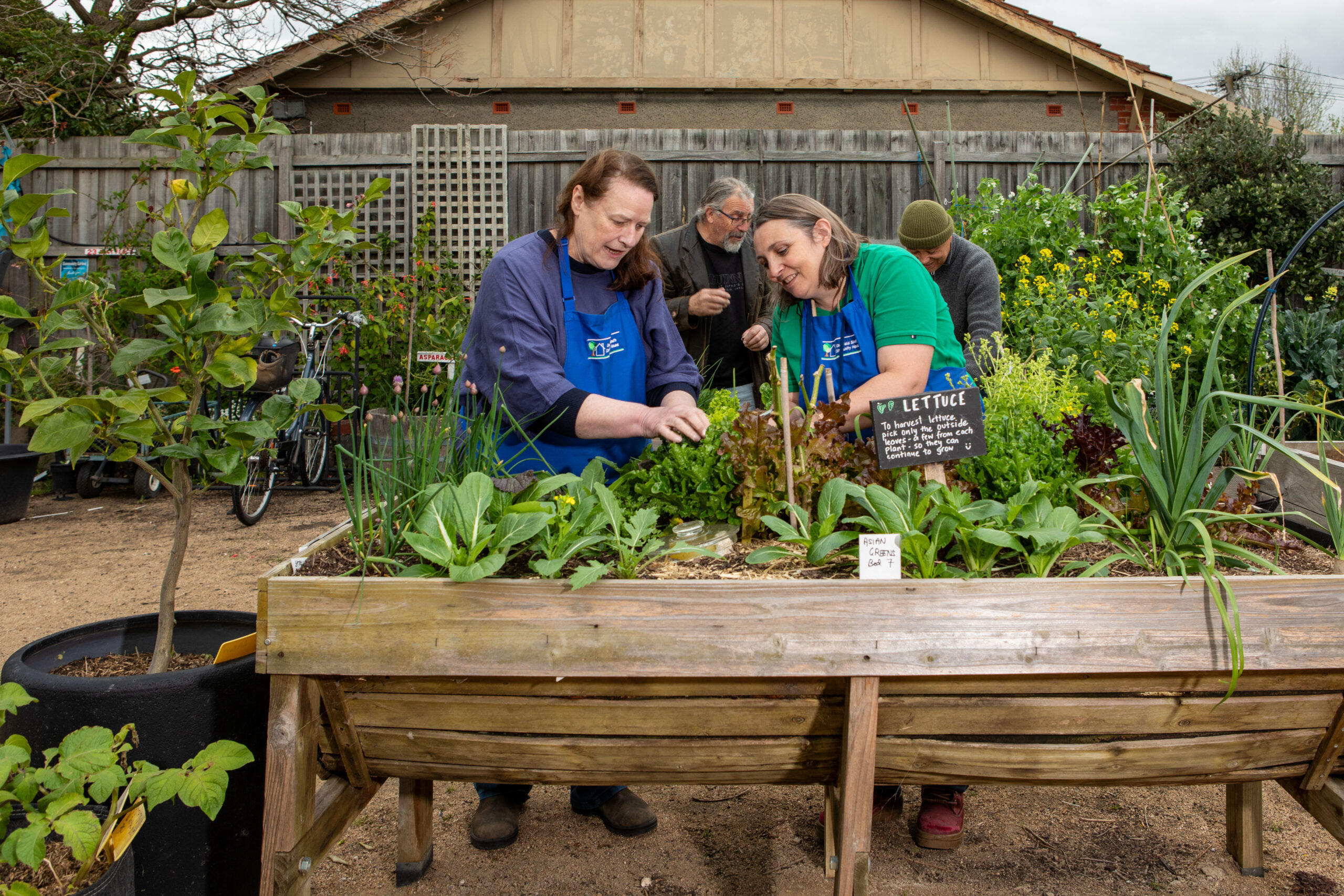
John and Chrystal: We have a membership program and we work hard to welcome people who are first-time visitors to the garden. We try to make sure people know how they can lend a hand whenever they visit, say with watering the seedlings so they don’t dry out. We’re just starting “Gardening with Chrystal” on Mondays, so new people interested in the garden can come in and help with whatever project is happening at the time and that should help them decide if they want to join up with the gardening community.
Everything that we grow, we share with the group or with our community. Our objective is to give people the opportunity to participate to whatever degree they want and we share regardless, it doesn’t matter whether you’re coming in here one day a year or you’re here every day. If you’re a member here, you can just drop in any time, the gate’s never locked, you can come in and take some food – you’re driving by, you want some parsley, or you want a tomato, or you need something for a salad. Things like pumpkins and other vegetables that are quite large, we’ll cut up and share out on an open day or a working bee.
It’s a communal effort – we have a lot of different roles that people share. The original idea behind this garden was to bring together people in the community that were alone, and we thought a community garden might attract people… It started down in that back corner with two or three beds, and it just grew.
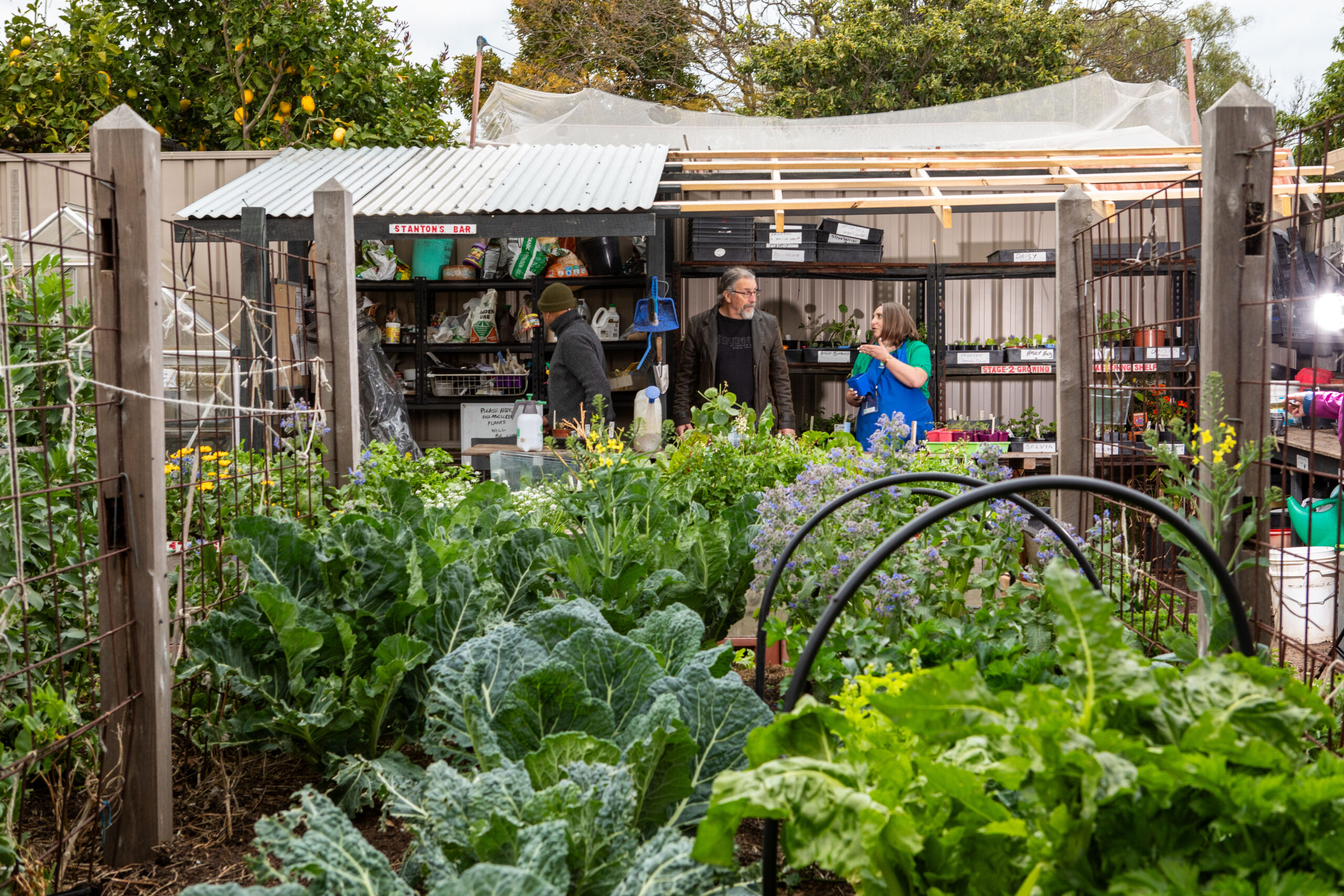
The garden and its wider community
John: The garden is a program of the community house and this is one of our adult programs for community engagement. It’s about people, it’s about giving people a space to come to. A place to learn, a place to meet people. That’s the reason it’s here. We’re not here to grow corn. It’s a means to an end.
Chris: We had an open day and a lady from another community garden visited, and she really liked the way we have communal plots and share the produce. She also thought the aquaponics, the propagation shed and the compost-making were great ways to engage more people and find a way for more people to be involved. She was going to take these ideas back to her community garden.
On the weekends when I’m watering, people from the wider community come in with their kids, and they go to visit the chooks, and then they also go around the beds and teach their children about the garden. They’re not members, but they just know about the garden, so they come.
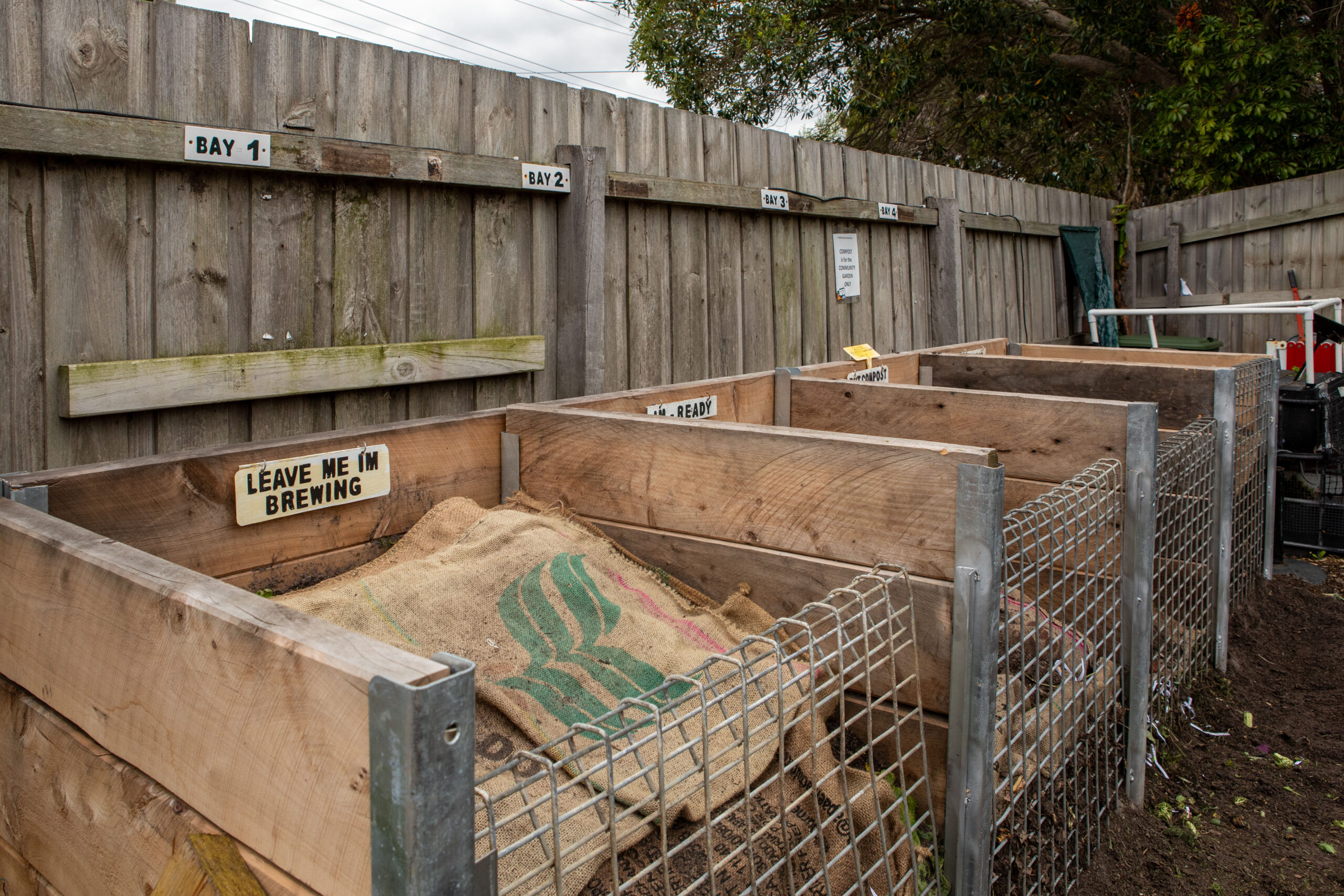
Why the gardeners work hard to produce good compost
John: Fika is currently the most important person here, because without the compost, we have nothing. It’s the basis of everything we do, it’s the basis of our potting mix, it’s the basis of our garden, and if it’s not turned regularly and looked after it’s no good. If you’re doing it really well, turning it all the time and making sure it doesn’t dry out, you can make some beautiful compost in 3-4 weeks. We get three large containers of discarded vegetables from local grocers each Wednesday. We add lawn clippings and leaf mulch provided by landscapers and then it’s just a matter of turning it.
Fika: I came and played chess at the Community House, and I overheard a conversation that there was an issue turning the compost. That’s how I got involved – I thought “I could do that”. I like spending time outside, and I can come whenever I feel like it. It’s been really good, I really enjoy it. I’ve learned so much from Chrystal since she came on board – she is so knowledgeable, she just gave me all these tips and ideas. I enjoy being in the garden and learning so it’s been great. It’s absolutely fantastic to be involved.
How the community garden demonstrates sustainable gardening practices.
The gardeners have planted native trees and grasses in the beds around the house and added habitat for insects and lizards throughout the garden, and they leave plenty of flowering plants for pollinators as well.
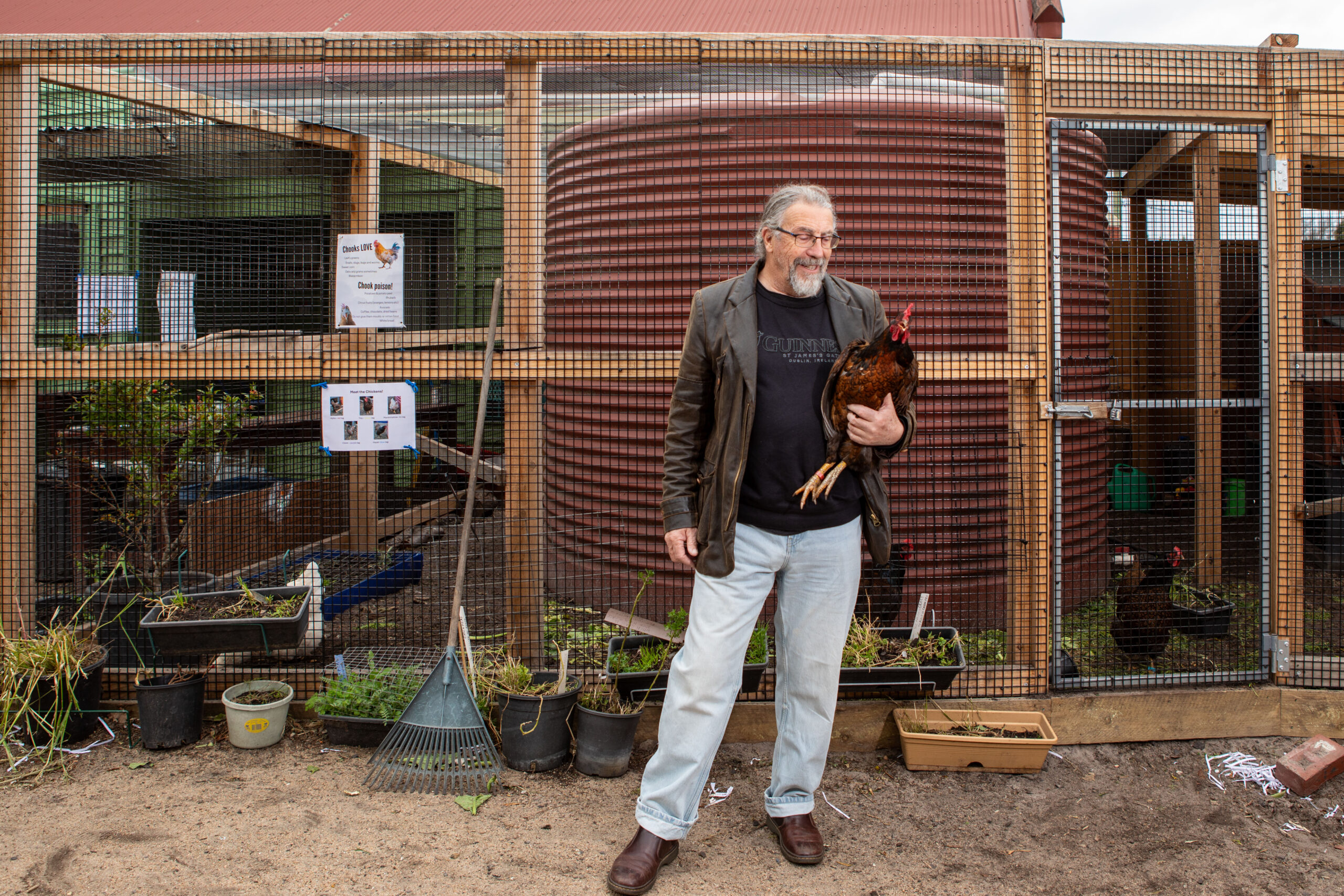
John: We added the water tank early on, and then we thought it would be a good place to also have the chooks, so we built their enclosure around the water tank. To look after the garden, we’ve got a sustainability team, an aquaponics team, a propagation team, a chook team, and a watering team.
Chrystal: There’s a little production line happens every Wednesday as soon as the waste produce is dropped off from the local grocers. The volunteers sit and pick through it all. Anything that still looks good is separated to be shared or cooked in the kitchen, and anything the chickens would enjoy like corn and things go to them, and then the rest of it gets put into one of the bays, and then, like magic, every Thursday morning, Fika comes and mixes it all in.
The volunteers see the benefit of that for the garden. A lot of them are older, and so they’ve grown up with that reuse mentality. They’re very happy to come in, and they don’t mind handling the donated produce at all.
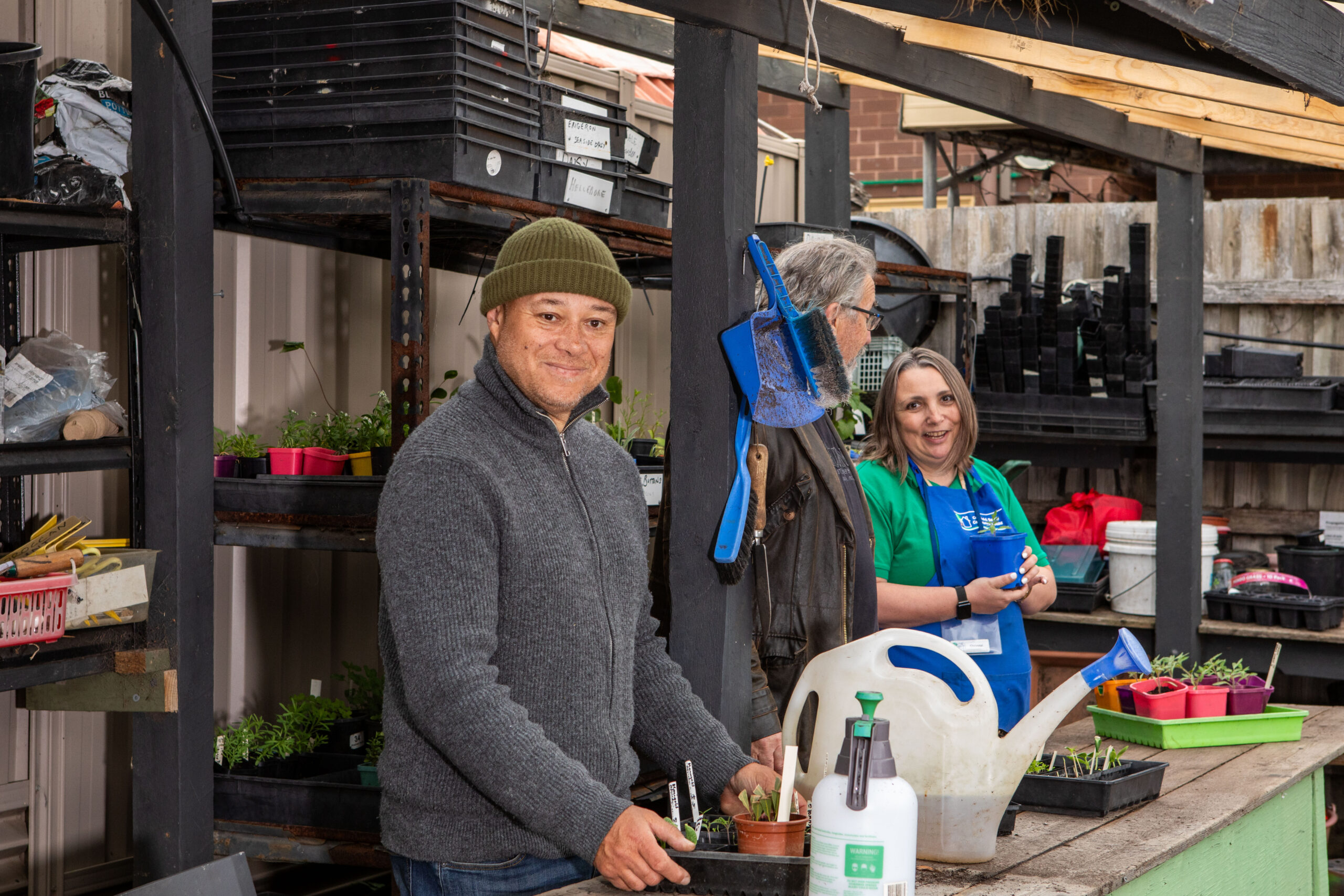
How the garden improves wellbeing for its community
Fika: It’s a good community group of people as well. People are here for their own benefit, and at the same time to get involved in the garden. That’s what I hear. People want to be part of something good and it’s good for the world as well as good for us.
We have to literally work together because no one person owns a particular plot. Everybody’s working together. So you become very easily and quickly part of this kind of community. I really had no idea about any of this 3 months ago but there’s a lot of people who are very thankful that I’m doing the compost, because they really need it, so you get really quickly involved. It’s literally about connection. It’s that community part that you need to work together. It’s lovely.
Chrystal: One of the most beautiful things I saw the first week I was here was on the Thirsty Thursday, where they all sit around and have drinks in the evening. It was dark, but the lights were all on, and a lady wandered past who had been visiting a sick relative and she came in and sat with everyone for a long time.
You don’t know who you’re going to touch, and you just have to be here. You’ve got to have open gates and open hearts.